I Thought Sports Dramas Had Lost Their Charm-Until I Found This One #FindingHerEdge
For a long time, I genuinely believed sports dramas had lost their spark. Somewhere between rushed montages and predictable arcs, the sport itself began to feel secondary. And then I watched Finding Her Edge, and realised I hadn’t fallen out of love with the genre—it had just stopped trying.
If you grew up on Disney movies—where ice-skating princesses and heroes ruled the screen, gliding to sweeping music, spinning so fast you wondered if gravity had taken the day off—this series feels like slipping back into that magic. Familiar, comforting, but surprisingly grown-up.

At the heart of the story is Adriana Russo, a protagonist who immediately commands attention. There’s a striking resemblance to Katniss Everdeen in her lean intensity, guarded body language, and that unmistakable don’t-mess-with-me-but-I’m-fractured energy. Adriana is navigating grief after her mother’s death, holding her family together, and quietly mourning a love she feels she had to give up long before she was ready.
The plot pivots when her elder sister, Elise—slightly show-off, undeniably gifted—is injured. With the ice-skating rink on the brink of collapse and sponsorships hanging in the balance, Adriana is pushed back into competition. And this is where the show pulls its best move.
Enter Brayden Elliott.
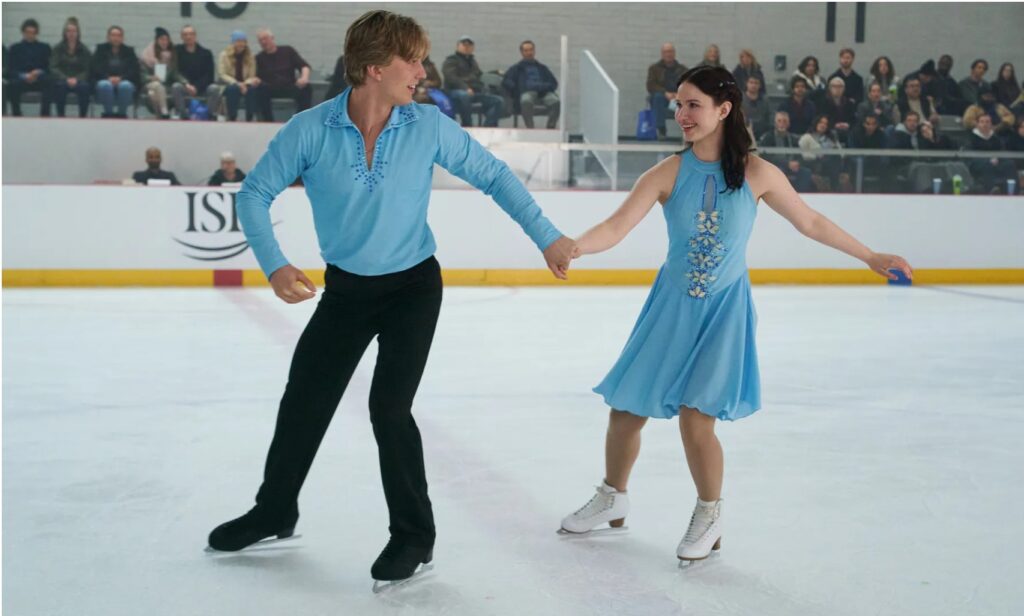
Brayden is brilliant on the ice and chaotic everywhere else—a classic rom-com setup, yes, but executed with surprising restraint. When their coach, Camille, a family friend with an uncanny read on people, pairs Adriana and Braden together, the chemistry is immediate and undeniably hot. Not loud or forced—just electric. The kind that lives in stolen glances, accidental touches, and routines that feel a little too intimate to be purely professional.
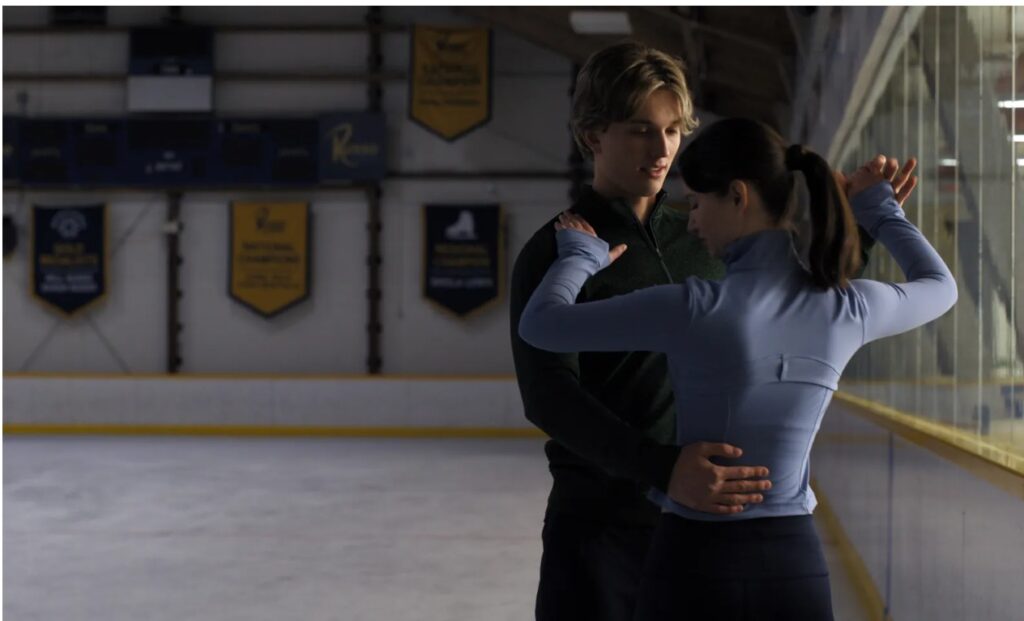
What’s impressive is how flawlessly the show balances this romance. Adriana and Brayden don’t just sell the sport—they rule the rom-com genre with ease. Their banter crackles, their tension simmers, and the slow emotional thaw between them feels earned rather than rushed.
And then there’s the skating. Finding Her Edge does what most sports dramas shy away from—it shows the full routines. No choppy edits. No cutting away at the good part. You watch solo skating, ice dancing, lifts, and footwork—performed by genuinely skilled skaters. The camera lingers long enough for you to appreciate the discipline, the risk, and the trust required, especially in partnered routines where romance and sport blur beautifully.
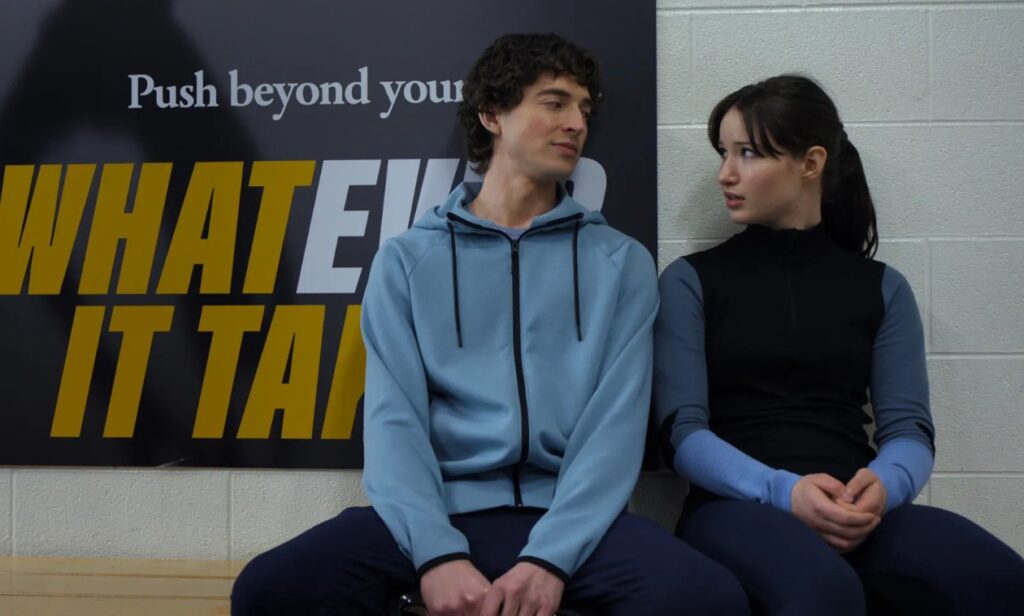
Beyond the rink, the show quietly deepens its emotional layers: a younger sister, Maria, who dares to imagine a future beyond skating; a single father doing his best to stay steady; and sibling rivalry rooted in comparison rather than cruelty. These themes don’t overpower the story—they enrich it.
The result is a dangerously bingeable series. Eight episodes disappeared in two nights for me, and only because my eyes eventually gave up.
Graceful, emotional, and unexpectedly romantic, Finding Her Edge doesn’t just revive the charm of sports dramas.
It proves they can still make your heart race—on and off the ice.


