From Haridwar to Mussoorie: An Escape into the Hills
Sometimes, you don’t need a grand holiday to feel like you’ve had one. You just need a few days away from the usual routine, a change of scenery, and enough time to stop looking at the clock.
That was really the idea behind this trip.
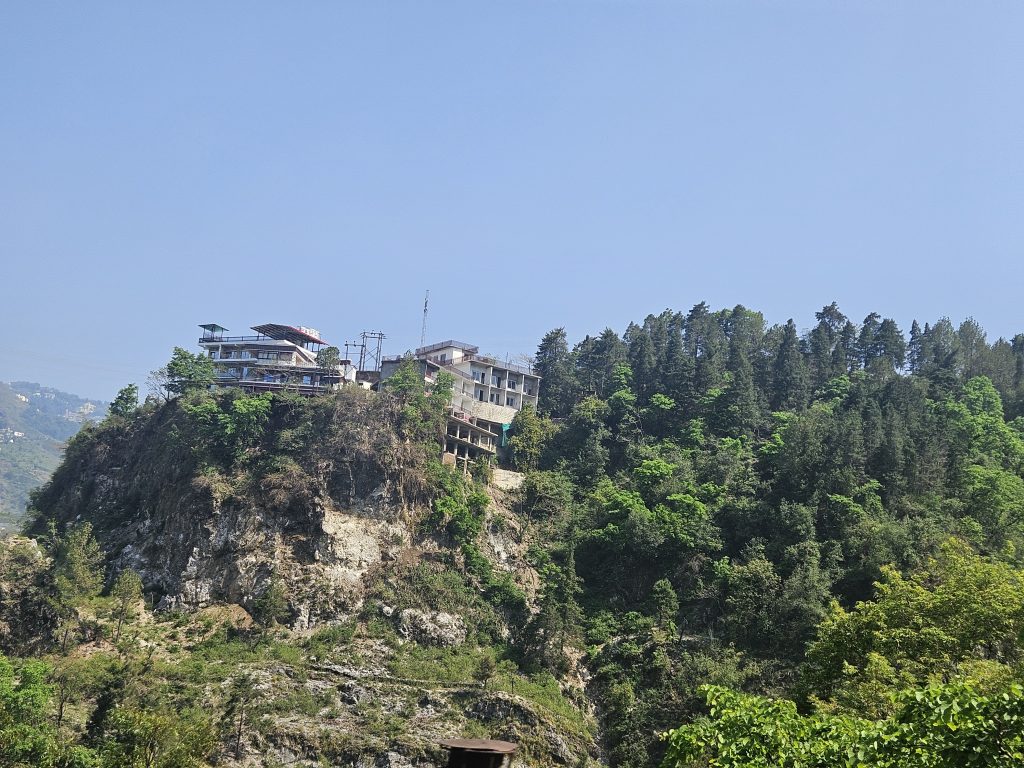
It wasn’t about ticking places off a list or trying to recreate the perfect travel photograph. We wanted to take things slowly, explore at our own pace, eat well, walk a little, rest a lot, and, most importantly, spend some uninterrupted time together.
Our route took us from Haridwar to Rishikesh and finally Mussoorie and Landour. And, as is usually the case with travel, some places surprised us in the best possible way while others left us wondering why we had come at all.
But somewhere between the ghats, mountain roads, café breakfasts, questionable hotels and long walks, the trip became exactly what we needed.
Day 1: Haridwar – Temples, Ghats and a Lesson in Hotel Selection
We reached Haridwar at around 12:30 p.m., tired, hungry and ready to check in.
Unfortunately, our first introduction to the city was Hotel Blue Sky.
Let’s just say that the hotel taught me an important travel lesson: sometimes a low price is not actually a bargain.
The cleanliness and hygiene standards were extremely poor, and the room was hardly the relaxing stopover we had imagined after travelling. There wasn’t much point in ruining the entire trip over one bad hotel, though, so we decided to make the best of it. Thankfully, we were staying there for just one night.
After resting for a few hours and waiting for the afternoon heat to become slightly more bearable, we hired a local auto-rickshaw and headed out.
Our first stop was Nav Grah Mandir, a relatively peaceful temple dedicated to the nine celestial bodies, or Nav Grahas, traditionally believed to influence different aspects of human life. After the heat and the hotel experience, the quietness of the temple was welcome.
From there, we went to Char Dham Mandir, where replicas of the four major Char Dham pilgrimage sites are housed together. It is an interesting concept, particularly for people who may not be able to undertake the much more demanding Char Dham Yatra itself.
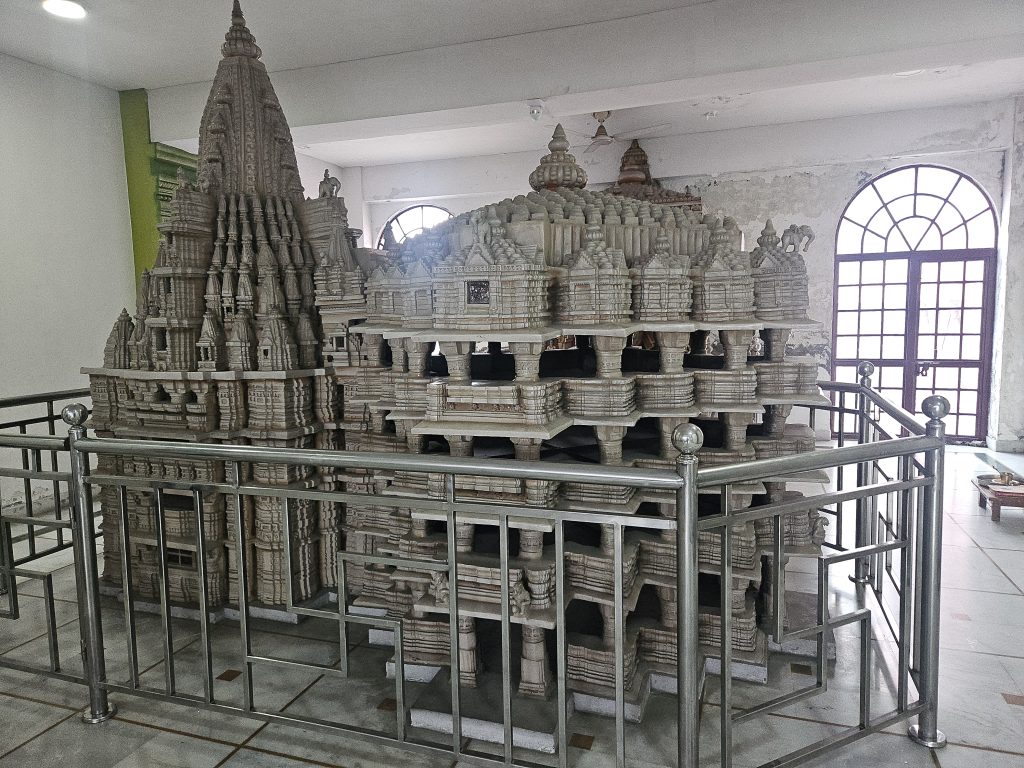
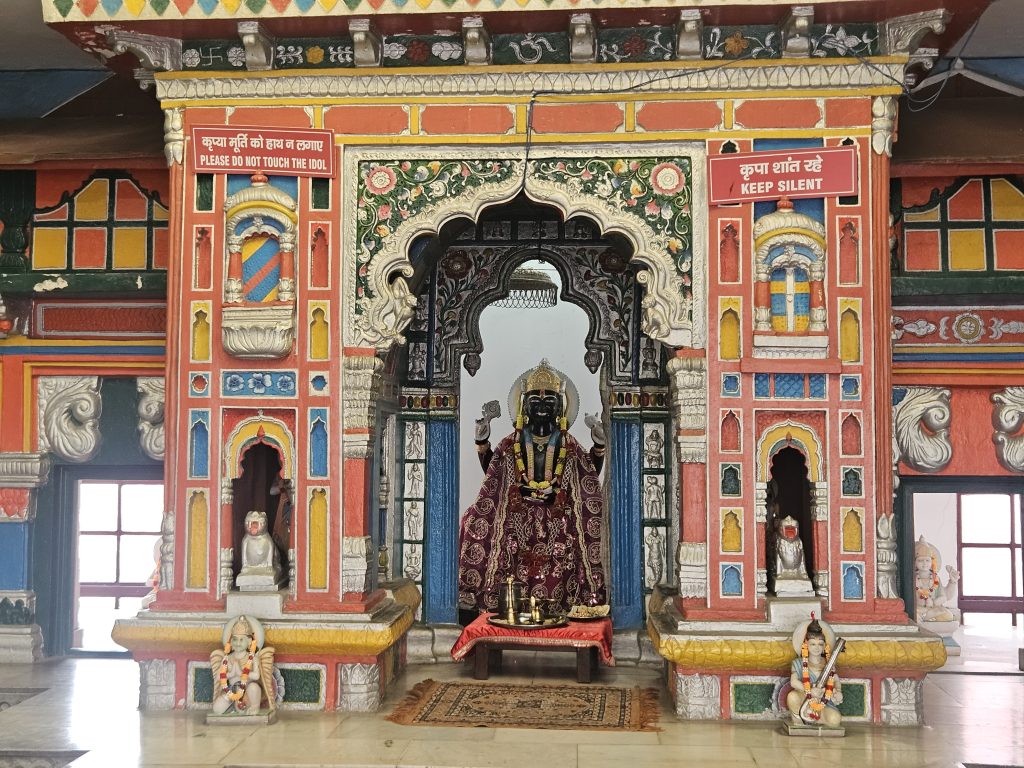
We then visited Lakshmi Narayan Mandir, another peaceful stop with traditional temple architecture and a calm atmosphere. There was something quite nice about moving from one temple to another without having a rigid sightseeing schedule.
Our next stop was Daksheshwar Mahadev Temple in Kankhal, one of the more historically and mythologically significant temples in the area. The temple is associated with the story of Daksha Prajapati, Goddess Sati and Lord Shiva, and the complex also includes Sati Kund. The mythology surrounding the place gives it an atmosphere that feels very different from a regular temple visit.
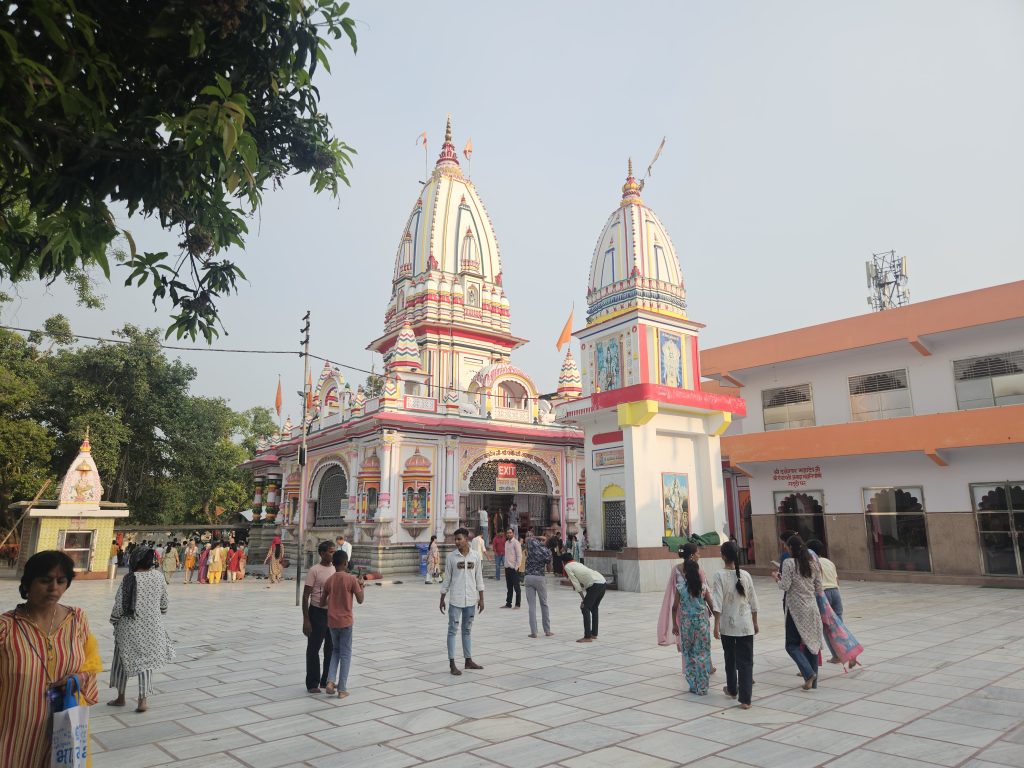
Then came Pilot Baba Ashram.
The ashram is spread across a fairly large campus, and despite the number of people around, there was a surprising sense of quiet. Pilot Baba’s Haridwar ashram is associated with yoga, meditation and spiritual practices, and the setting lends itself rather well to simply slowing down for a while.
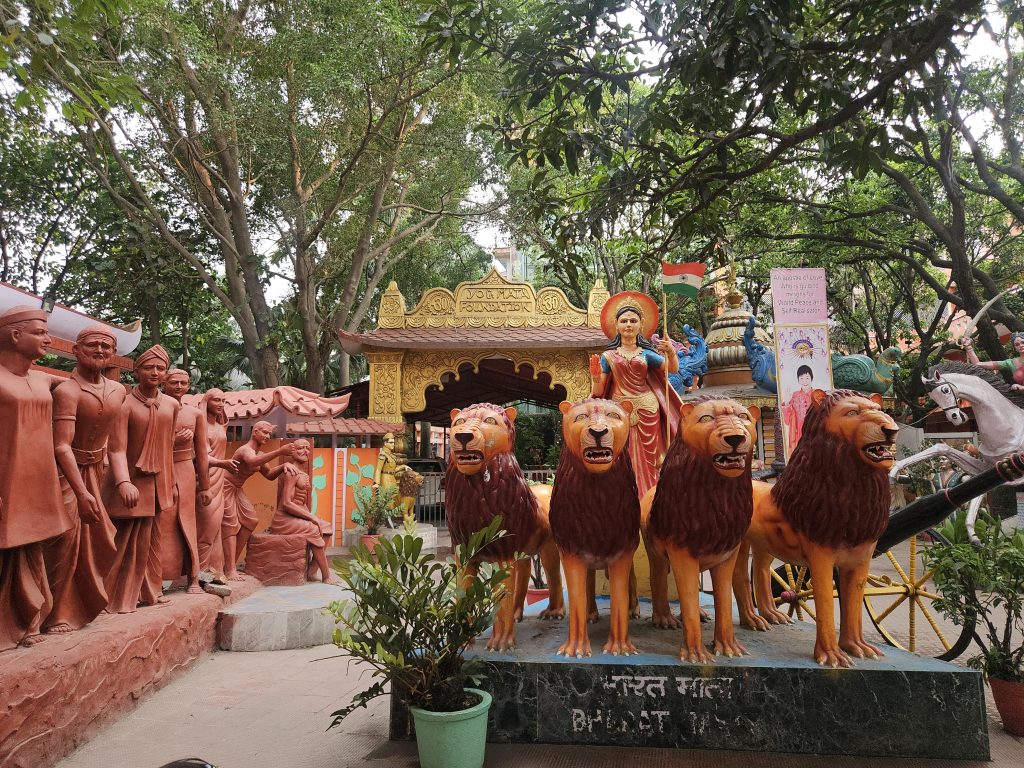
By evening, we were ready for something that didn’t involve sightseeing.
So we headed towards Amrapur Ghat.
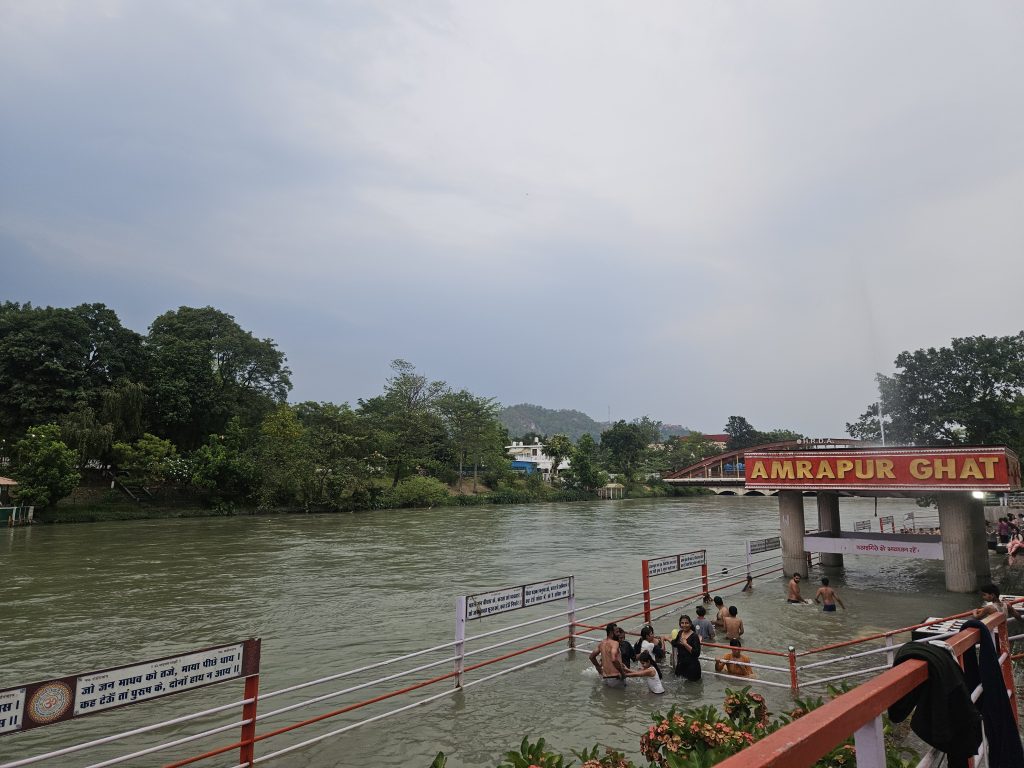
And this, unexpectedly, became one of my favourite parts of the day.
There is something about sitting beside the Ganges in the evening that is difficult to explain without sounding slightly sentimental. The heat begins to disappear, the light softens, the river keeps moving as if it has nowhere else to be, and the noise of the city gradually becomes background music.
We walked along the ghat, watched the evening settle in and simply enjoyed being there.
Day 2: Rishikesh – Cafés, Ghats and Much-Needed Relaxation
The next morning began early.
We left Haridwar at 6 a.m. for Rishikesh with a local travel operator who arranged a cab for us. Thankfully, the driver turned out to be polite, professional and, most importantly, patient.
At that hour, the roads were wonderfully empty, and we reached Rishikesh at around 7:45 a.m.
Our hotel, Chakrah by Hermitage, wasn’t ready for check-in yet. Instead of sitting around with our bags and watching the clock, we decided to go exploring.
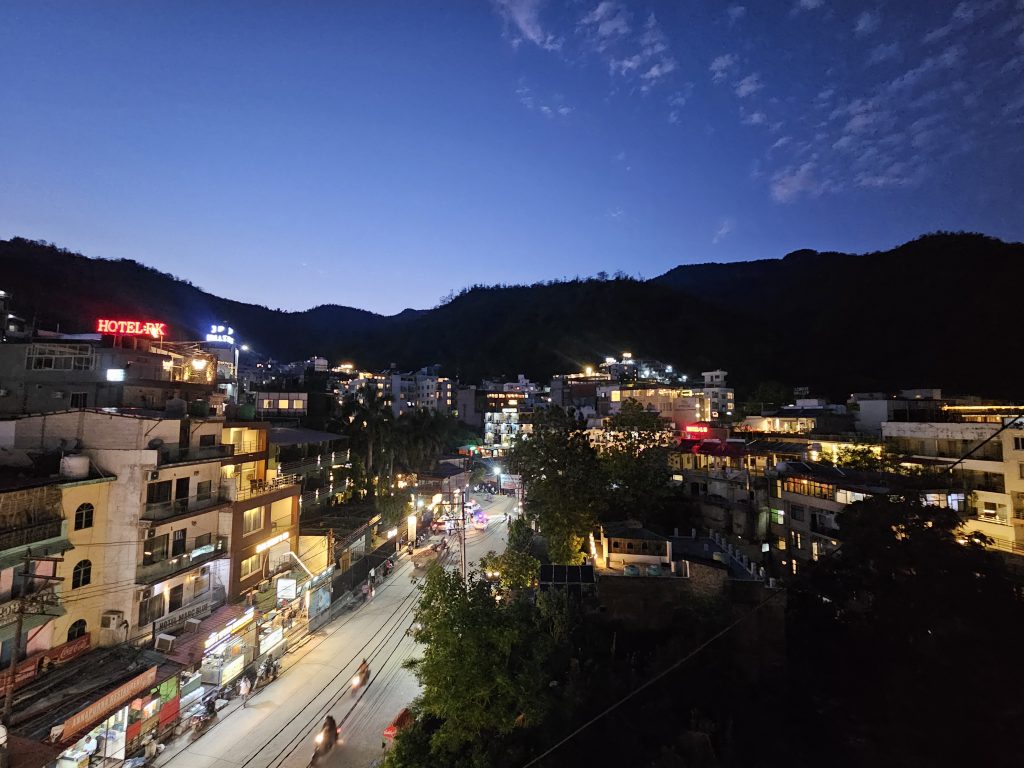
We headed towards Tapovan Ghat.
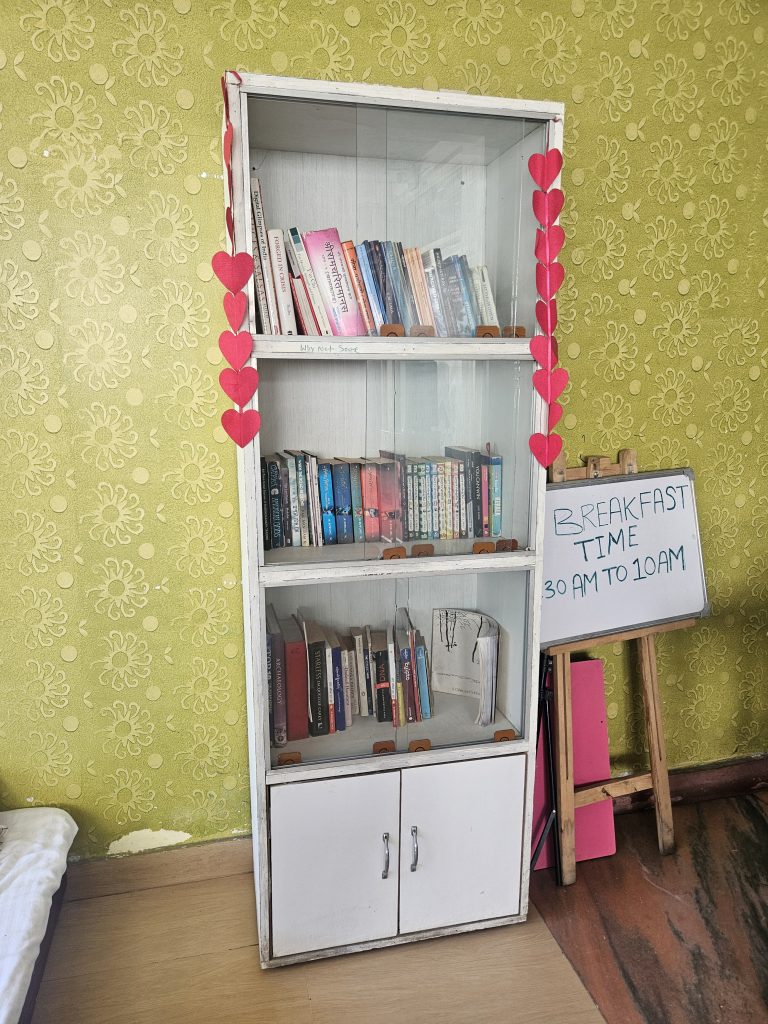
Tapovan has a very distinctive Rishikesh atmosphere. It is one of the livelier parts of the town, filled with yoga centres, cafés, guesthouses, little shops and travellers, but it still retains that unmistakable connection with the Ganges and the surrounding hills.
From there, we walked towards the Lakshman Jhula area.
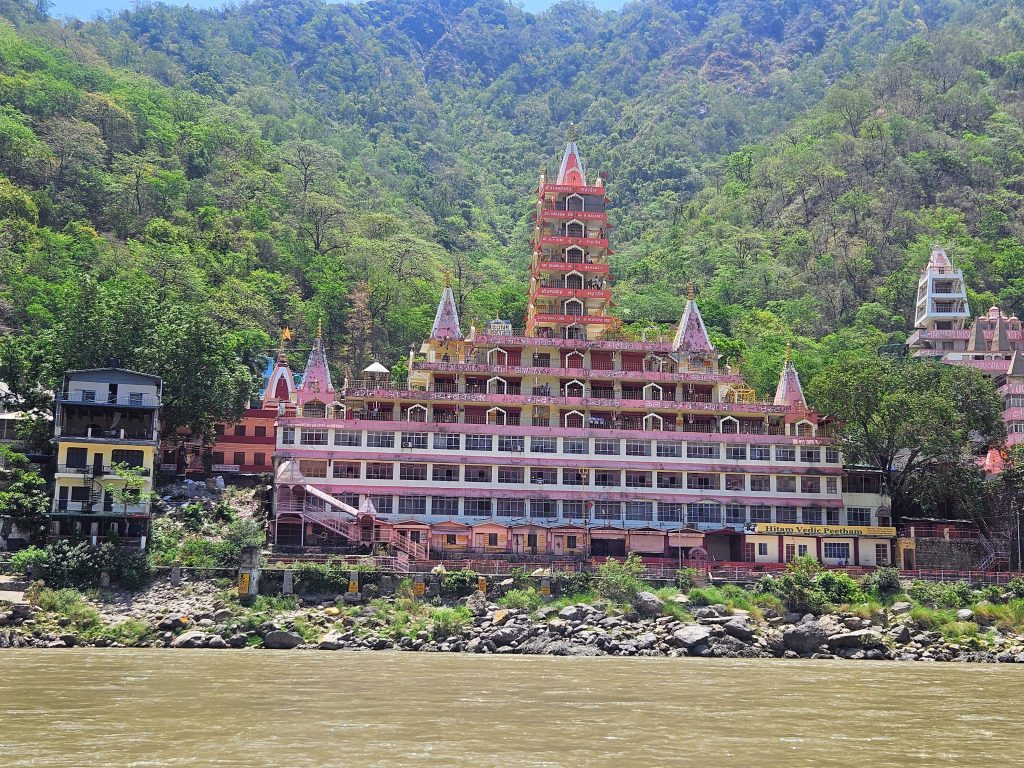
The area around Lakshman Jhula is probably one of the most recognisable parts of Rishikesh, with the Ganges flowing between the hills, temples and ashrams around it, and cafés tucked into the lanes. The bridge itself has an interesting history and is traditionally associated with the belief that Lakshman crossed the river at this spot on a jute-rope bridge.
One small but important update for anyone reading this as a travel guide: the old Lakshman Jhula is no longer the functioning pedestrian crossing it once was, so check the current crossing arrangements before planning your route around it.
We weren’t really in the mood for an intensive sightseeing session anyway.
We walked, looked at the river, wandered through the lanes and absorbed the atmosphere.
And then, inevitably, we got hungry.
That was when we discovered Naman Café, conveniently located right next to our hotel. And this café became something of a recurring character in our trip. The breakfast was excellent, the portions were generous, and the food was consistently good. Good enough, in fact, for us to keep returning over the next few days.
After finally checking into the hotel and getting some much-needed rest, we decided our legs deserved some attention too.
So we went to Varenyam Spa.
The leg massage was, quite simply, one of the best decisions of the trip.
After all that walking and travelling, I was beginning to wonder why I had voluntarily signed up for a holiday that involved so much walking. The massage restored my faith in both travel and my own decision-making abilities.
Dinner was at Thrill Café.
The hotel’s kitchen wasn’t operational, so on the occasions when we didn’t feel like going out, Zomato became our backup plan.
There is a very specific kind of luxury in eating dinner in your hotel room after a long day, without having to put on shoes again.
Day 3: Slow Travel in Rishikesh
Day 3 was intentionally slow.
No ambitious itinerary. No race to see five places before lunch. We decided to hike towards Sati Ghat, taking our time along the way. There were the obligatory holiday detours, of course.
We returned to Naman Café for breakfast, by which point I suspect the staff had begun recognising us.
The rest of the afternoon was wonderfully uneventful.
Lunch was ordered in. We rested. We talked. We did absolutely nothing for stretches of time.
And honestly, that was exactly the point.
By evening, we were back at Varenyam Spa.
When you find something that works, why experiment?
Dinner was at Anna’s Mess, where we had a simple, satisfying meal before calling it a night.
Rishikesh ended up being less about sightseeing and more about the rhythm of the place — the river, the cafés, the walks, the food and the luxury of having nowhere particularly urgent to be.
Day 4: Mussoorie Bound – Expectations vs Reality
We left Rishikesh for Mussoorie at 6 a.m., again in a local taxi.
The early start was worth it. Mountain roads are simply more pleasant when you’re not fighting through traffic at every turn.
Our first stop was Sahastradhara near Dehradun.
And this was, without question, the biggest disappointment of the trip.
I’d expected a beautiful natural spot known for its springs and mountain setting. Instead, the reality was rather depressing. The water looked dirty, people were washing clothes nearby, litter was scattered around, and there was an unpleasant smell in parts of the area.
Any thought of taking a dip disappeared immediately.
It was particularly frustrating because you could see how beautiful the place could be if it were maintained properly. Sahastradhara is associated with sulphur springs, and its natural setting has considerable potential. But on the day we visited, neglect overshadowed the landscape. Uttarakhand’s tourism planning documents also identify Sahastradhara as a sulphur-water spring site.
Thankfully, breakfast at Yummies helped restore our mood. From there, we continued towards Bhatta Falls. Bhatta Falls is around 8 km from Mussoorie and is known for its natural setting and pools. Getting to the upper sections involves a walk that is not particularly difficult, although the steps are broken in places and the pathway can be uneven. Even with a child, we found it manageable. And once you reach the water, it is quite lovely.
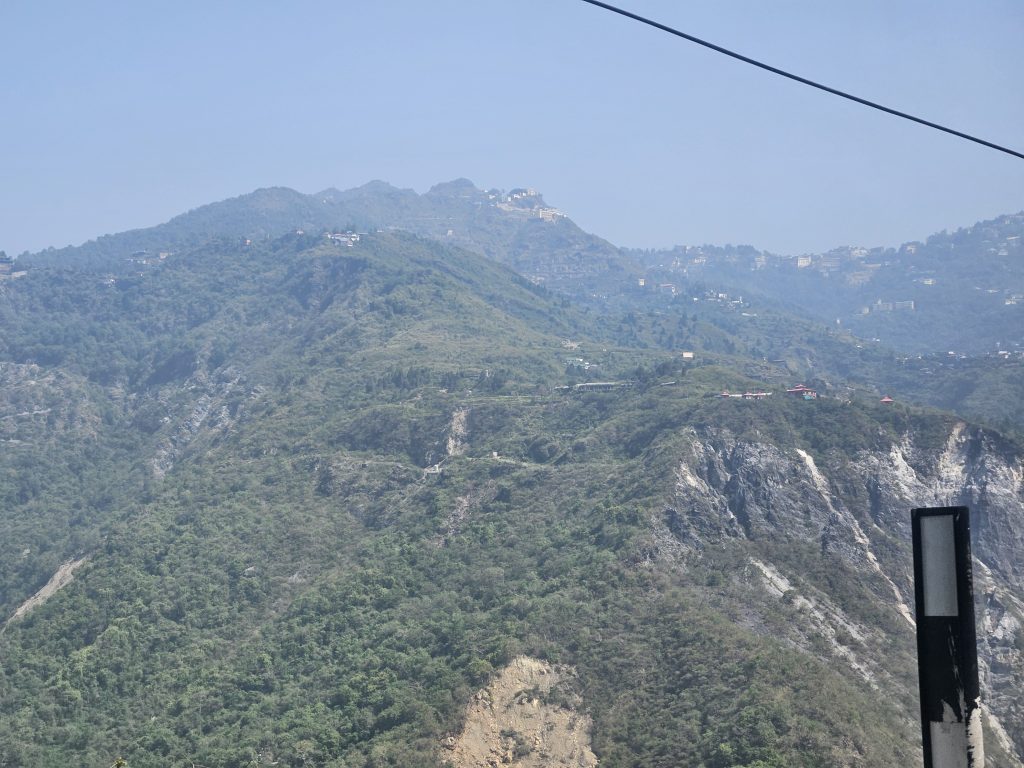
The mountain water was cold enough to make us gasp, but that didn’t stop us from dipping our heads into it and enjoying the freshness. Unfortunately, the surroundings were a different story. The route has become increasingly commercialised, with small eateries and stalls lining the way. And, as is sadly common at popular natural attractions, plastic waste has begun making its way into spaces that should have remained pristine.
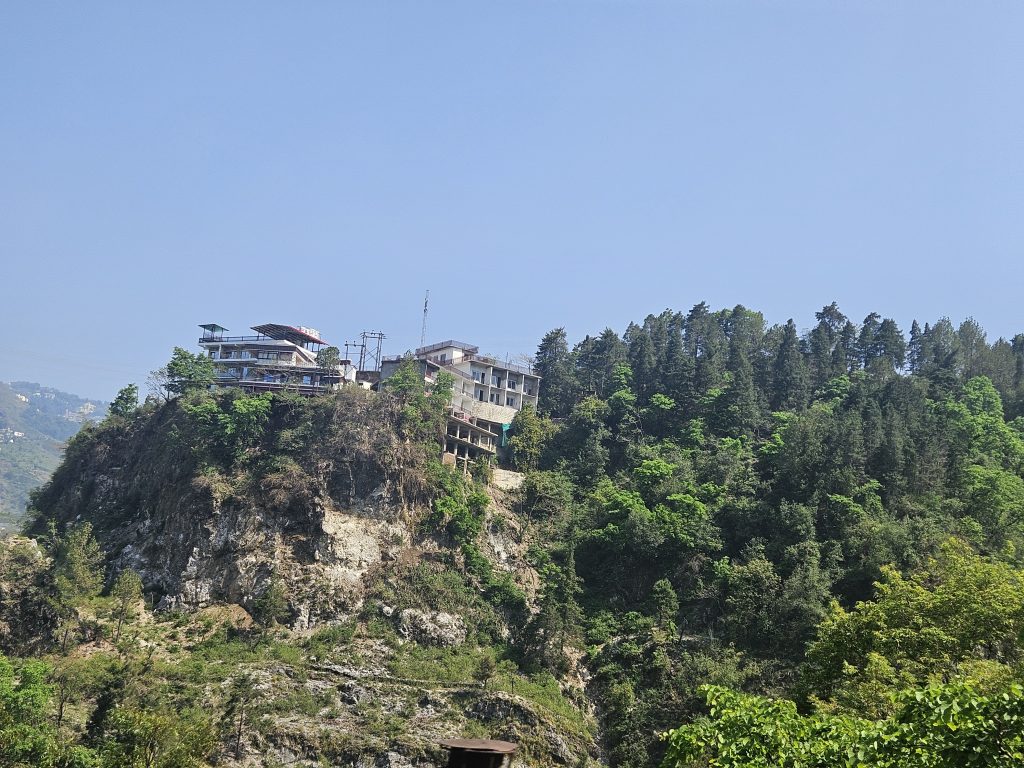
It was difficult not to think about the irony: people come to waterfalls to experience nature and then leave behind the very thing that damages it.
We stopped for tea beside the water before making our way back.
Next came Mussoorie Lake. It is an artificial lake on the Dehradun-Mussoorie road, known for boating and views of the Doon Valley. For us, though, it was more of a quick stop than a highlight. Sometimes a place simply doesn’t click with you. By afternoon, we checked into Nature’s Vault Homestay and finally gave ourselves permission to do nothing.
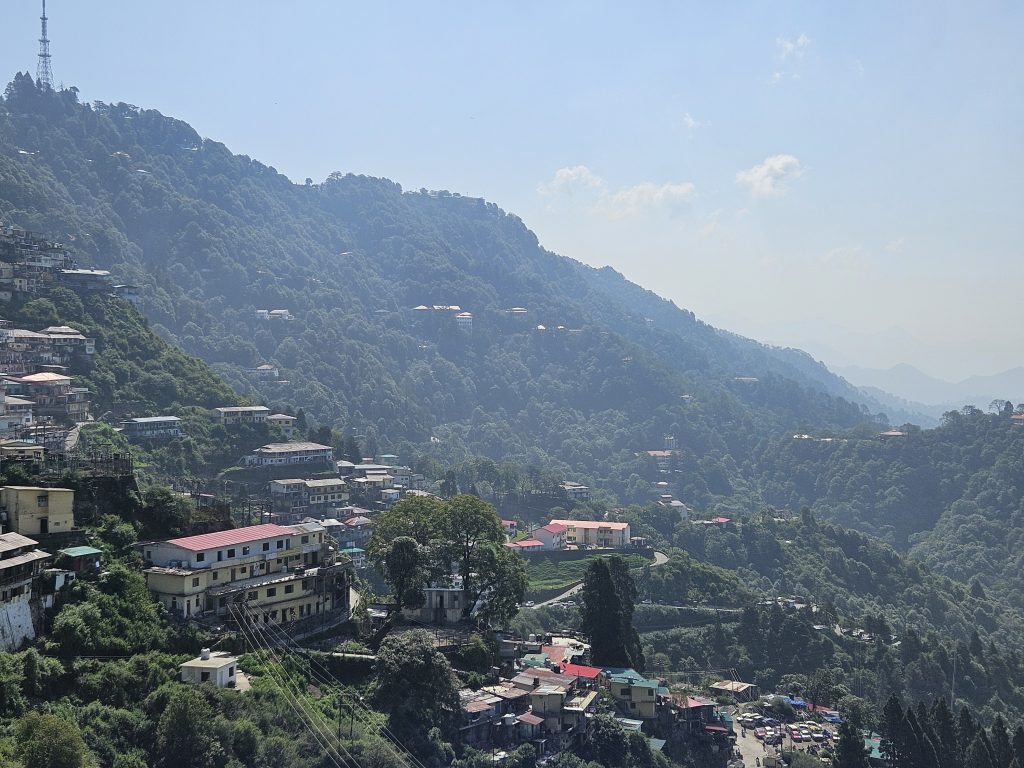
Later that evening, we walked down to Mall Road. Now, Mall Road in Mussoorie is exactly what you expect from a popular hill station — lively, crowded, colourful and full of shops, cafés and tourists.
And expensive.
Very expensive.
At one point, I began to feel that simply standing on Mall Road should come with a service charge.
We eventually walked back uphill to the homestay, where a home-cooked dinner was waiting for us. After the noise and crowds of Mall Road, that quiet dinner felt particularly comforting.
Day 5: Landour – The Highlight of the Trip
And then came Landour.
If I had to choose one place from the entire trip that I genuinely wanted to stay in a little longer, it would be this. We hiked approximately 4.5 kilometres to Char Dukan, taking our time and enjoying the mountain air. Landour feels like a completely different world from the busier parts of Mussoorie.
It is a historic British-era cantonment area, known for its old cottages, winding roads, deodar and pine trees, churches and quieter atmosphere. Even the name has colonial roots, having been derived from Llanddowror, a village in Wales.
But what I loved most wasn’t any single monument. It was the pace. Landour doesn’t seem particularly interested in entertaining you every five minutes. And that’s precisely its charm.
Char Dukan, one of Landour’s best-known spots, began with four little shops serving snacks and drinks, which explains the name. Today, it is a much-loved stop for pancakes, omelettes, hot chocolate and other comfort food.
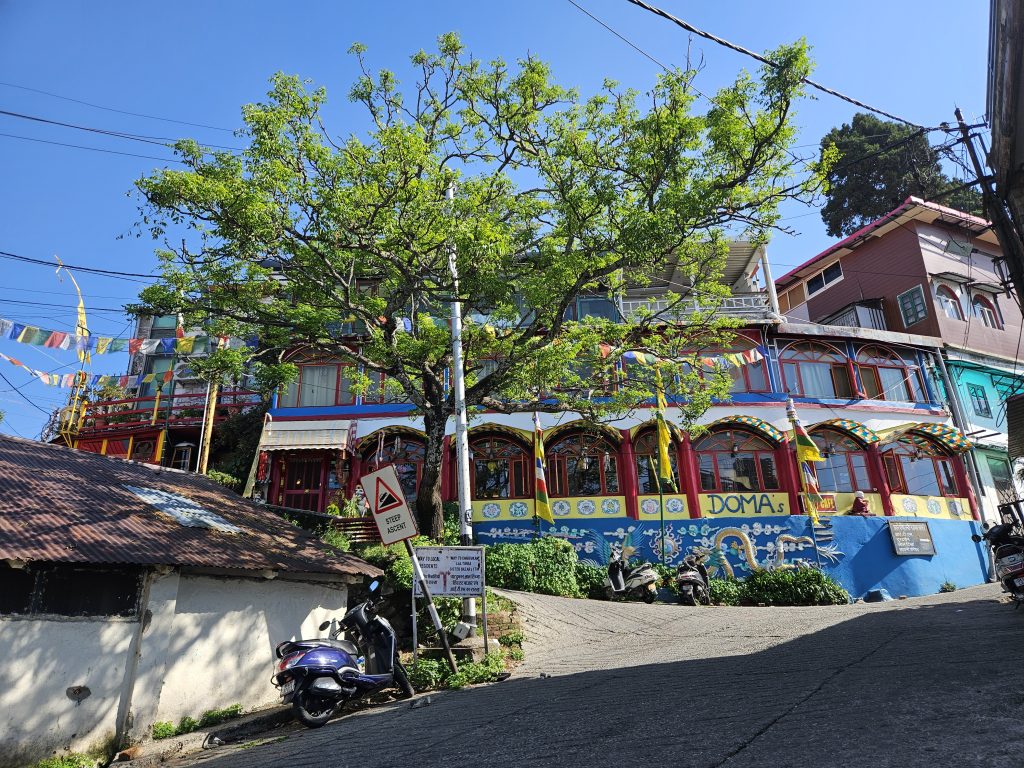
We spent time simply soaking in the atmosphere instead of trying to squeeze every possible attraction into the day and eventually, headed back for an afternoon of rest.
In the evening, we returned to Mall Road one last time for milkshakes, a little shopping and one final look at Mussoorie before beginning our journey home.
Back to the Salt Mines
The next day, we took a cab to Dehradun and began the journey home.
And just like that, the trip was over. Looking back, it wasn’t a perfect holiday.
There was the terrible hotel in Haridwar.
There was the disappointment of Sahastradhara.
There were overcrowded attractions, overpriced tourist spots and enough plastic litter to make me question humanity’s relationship with dustbins.
But there were also quiet ghats. Cold mountain water. Early morning drives. Café breakfasts that became traditions.
Most importantly, there was uninterrupted time with my daughter. And perhaps that’s what made the trip special.
Travel doesn’t always give you spectacular views or perfectly planned days. Sometimes it gives you a bad hotel, a surprisingly good breakfast, tired legs, a road you didn’t plan to take and an afternoon when you simply sit around doing nothing.