#Review: Love of Your Life: When Grief Refuses to Let Go
Some love stories teach you how to fall in love. Others remind you how difficult it is to find your way back to life when love is taken away from you. Love of Your Life belongs to the latter.
This American romantic drama, directed by Rachel Morrison and written by Julia Cox, follows Maya, a 26-year-old nurse in Boston who is estranged from her single mother. Then she meets Charlie, and for once, life seems to be playing on her side.

Charlie is one of those rare green flags who doesn’t try to fit Maya into a mould of his own. He wants to understand her, what makes her tick, what she enjoys, and who she wants to be. Their relationship feels incredibly credible and heartwarming. There is an ease to their companionship, the kind that makes you believe these two people genuinely belong together.
But life, as we know, doesn’t always play fair.
Set against the onset of the COVID-19 pandemic, the film captures Maya’s exhaustion as she struggles through long hospital shifts and staff shortages. Charlie remains her constant, until he contracts COVID himself. His asthma complicates matters, and he is eventually hospitalised. Maya loses him, and with him, the one person around whom she could be unapologetically herself. Just when life had begun to feel a little kinder, it takes away the very person who made it so.

Grief, however, rarely arrives alone. When Charlie’s mother, Ruth, confronts Maya in the aftermath of his death, the overwhelming pain gives way to blame. Ruth accuses Maya of being careless about Charlie’s health, and Maya retreats into herself. She shuts the world out, including Ruth and Jason, her friend. Sometimes, when the pain is too much to bear, even the people who might help us heal become reminders of what we have lost.
Three years later, we find Maya in Lisbon, now 31, living a life that might look enviable from the outside. Lisbon was one of the places she and Charlie had dreamed of visiting together. She indulges in one-night stands, keeps people at arm’s length, and seems to have mastered the art of moving from one day to the next without really being present in her own life.

Then comes Felix, a charming British divorcee with a young daughter. They share a lovely connection, and for a while, it seems as though Maya might finally be ready to let someone in. But when Felix wants to turn their relationship into something more serious, Maya cannot bring herself to take that leap. He refuses to remain in a relationship without commitment, and their paths begin to diverge.
What makes Maya’s journey so compelling is that she isn’t simply afraid of falling in love again. She hasn’t quite learnt how to live with the love she has already lost.
At one point, she describes wanting to be like a floating particle of matter, with nowhere to go. And isn’t that a rather profound way of describing grief? The desire to exist without having to belong anywhere, to drift through life without being answerable to anyone, perhaps even without having to confront oneself.
Through Maya, we see how trauma can seep into one’s very being. Every cell seems to scream with pain, even when the person inhabiting that body appears perfectly functional. She travels, meets people, and lives a life many would dream of. Yet, beneath all that movement, she remains painfully stuck. Because sometimes, you can travel halfway across the world and still find yourself standing in the same place emotionally.
What I particularly loved about the film was its pacing. Some might call it slow, but I thought that was precisely its beauty. Grief doesn’t follow a neat timeline, nor does healing happen in a series of dramatic revelations. Sometimes, it is the smallest realisations that matter. The gradual understanding that shutting everyone out isn’t the same as protecting yourself. That moving on doesn’t mean leaving someone behind. And that closure isn’t always about finding answers; sometimes, it is about learning to live with the questions.
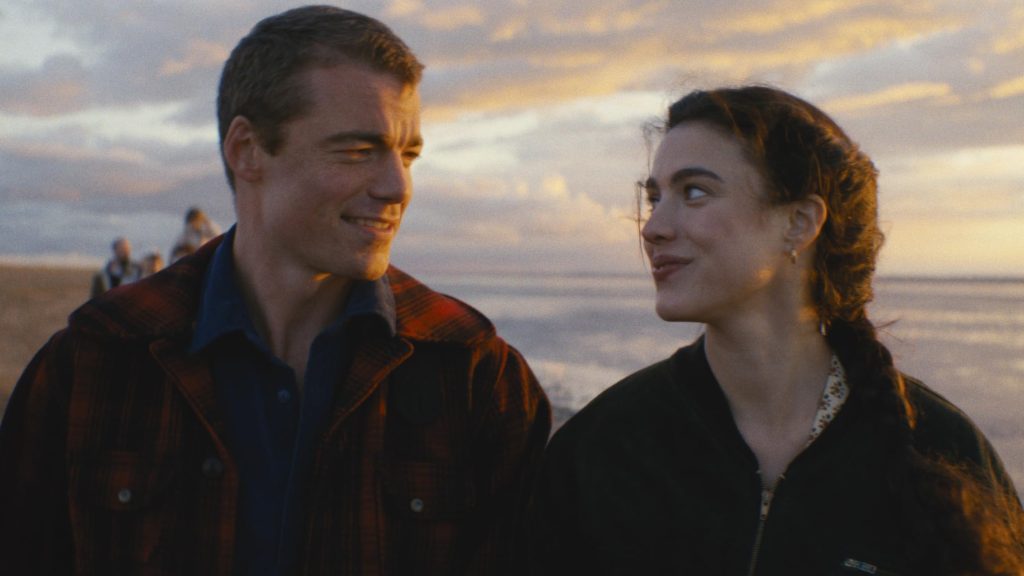
Over the course of those three or four years, Maya begins to understand that she cannot keep the doors of her past firmly shut and expect the rest of her life to flourish. She needs to confront what happened, reconsider the relationships she abandoned, and allow herself the possibility of connection again. Not because she needs someone to rescue her, but because being human means allowing other people to be part of our lives, even when doing so feels frightening.
I also found myself thinking about The Map of Longing, which I reviewed recently (read my review here). Both stories explore grief, but they approach it from different directions. One person’s way of grieving need not resemble another’s, and neither has to be wrong. Some people hold on; others run away. Some seek company, while others disappear into solitude. There is no universal handbook for surviving loss, much as we might wish there were one.
Love of Your Life is a heartwarming film, though not necessarily in the conventional, feel-good sense of the word. It doesn’t suggest that time magically heals everything or that finding another person makes the pain disappear. Instead, it reminds us that life can become bearable again, little by little, when we stop treating our grief as something we must hide from the world.
I’d recommend this film to anyone who appreciates character-driven dramas that take their time telling a story. It is tender, thoughtful, and deeply human. And perhaps its greatest reminder is this: we don’t have to stop missing someone to start living again. Sometimes, both can exist in the same heart.

You May Also Like

ASUR: The Battle Between Myth & Logic- A Review

When A Teacher’s (Short) Note In A Child’s Diary Made A Big Difference
