#Review: Forget Ram. Yash’s Ravana Is the Reason You Should Watch Ramayana.
Let me begin with a confession: I am not a fan of Ranbir Kapoor, and I absolutely hated Adipurush. The idea of recreating mythology through excessive CGI has never particularly appealed to me. So, watching Ramayana wasn’t exactly on my agenda. However, I wanted my daughter, who is quite besotted with the epic and has an assortment of Ramayana books lying around the house, to experience her first 3D film. I figured three hours would be manageable since she already knew the story. What I wasn’t prepared for was how thoroughly the film would win me over.
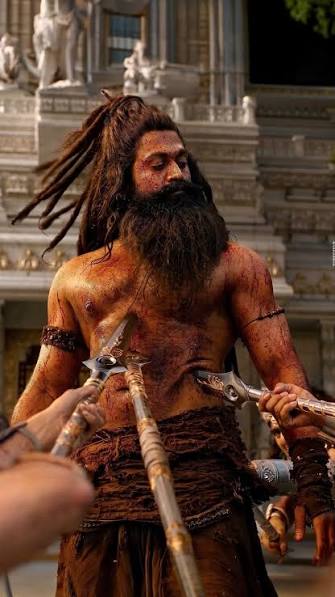
The film opens by establishing Ravana’s origins, his mother’s influence and his transformation from a scholar and artist into an ambitious ruler. And this is where Yash absolutely steals the show. His voice, diction, commanding presence and sheer gravitas make Ravana an incredibly compelling character. He doesn’t need to shout or indulge in unnecessary theatrics. There is an intellectual sharpness to his portrayal that makes you understand why Ravana was as formidable as he was. We witness the making of a man whose greatest strengths eventually become the instruments of his downfall. What a lasting performance! Yash, take a bow.
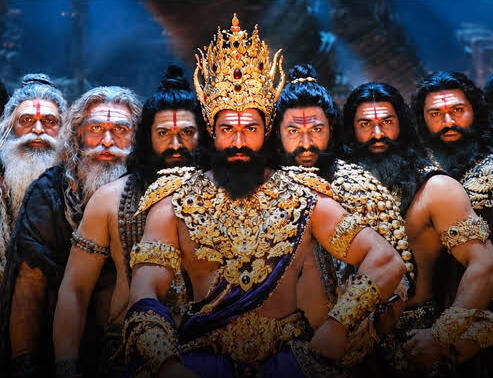
One of the most fascinating cinematic choices, however, is the representation of Ravana’s ten heads. Every time he is confronted with a decision, particularly when he has to choose between restraint and revenge, we are taken into his mind. His ten heads, almost functioning as ten distinct brains, offer different perspectives and arguments. It is an interesting visual metaphor for his intellect, his internal conflicts and his ability to process multiple possibilities.
Of course, the irony is that despite all this intellectual prowess, his decisions are repeatedly driven by ego, vengeance and an inability to recognise his own limitations. What appears to be extraordinary intelligence eventually becomes the very instrument of his destruction.
The narrative then shifts towards Ram, and the contrast is fascinating. Where Ravana is driven by ambition and revenge, Ram is defined by restraint and a sense of duty. Ravi Dubey as Lakshman is another pleasant surprise. He provides some much-needed comic relief, but there is considerably more to his character than that. Lakshman gives up his life as a prince and accompanies his brother and sister-in-law into exile. He is also the one who constantly anticipates danger and attempts to caution Ram and Sita. His warnings are not always taken seriously, but that, in itself, makes his character interesting. He is protective, observant, occasionally exasperated and deeply devoted. I thought Ravi brought a lovely balance to the character.
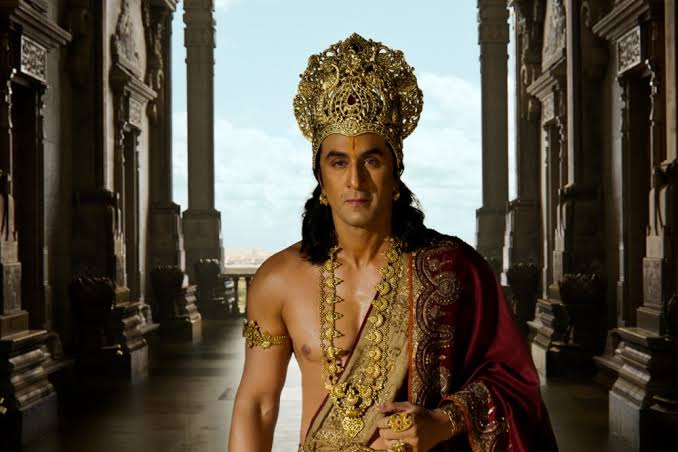
There are several beautiful moments in the film, but I particularly loved the sequence depicting Ram and Sita’s wedding. I have never really looked at the Ramayana primarily as a love story. It has always been an epic of duty, sacrifice, devotion and the triumph of good over evil. But the way Ram and Sita’s relationship is portrayed here made me look at it through a slightly different lens.
There is something incredibly heartwarming about the tenderness of their relationship. The sequence beautifully captures devotional love, unconditional affection and the idea of eternal belonging. It is also fascinating to see how even the gods seek divine intervention when it comes to finding their preferred life partners. Apparently, even celestial beings aren’t exempt from the business of finding the one!
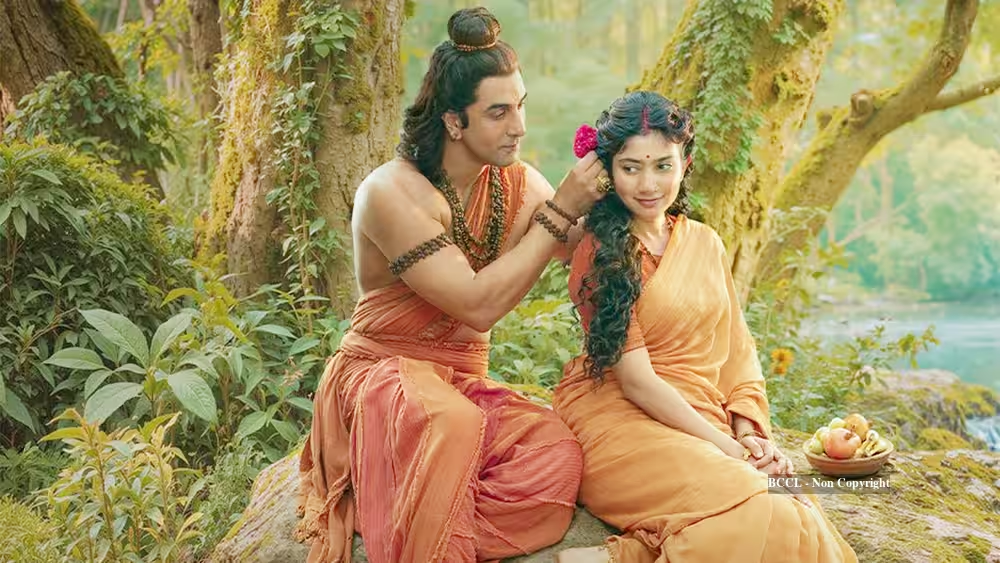
On a more personal note, I have always had certain reservations about the way Lord Ram’s character is interpreted, particularly when it comes to his questioning of Sita’s purity and devotion. I do not question the divinity of Ram, but I have often struggled with the decisions attributed to him, especially when viewed through the lens of an individual relationship.
What I found interesting about this portrayal is its emphasis on Ram as a man bound by duty. His decisions appear to stem from his obligations towards his kingdom, his subjects and his family. He is constantly negotiating between what he wants as an individual and what he believes he must do as a ruler. This distinction becomes particularly important as the narrative progresses.
And perhaps this is what makes me look forward to the second instalment with such anticipation. I want to see where the director takes this interpretation of Ram’s character and, more importantly, how he chooses to conclude it.
And then there is Jatayu.
I genuinely did not expect this character to leave such an impression on me. The way Jatayu watches over Ram, Sita and Lakshman, and the emotional significance attached to his eventual sacrifice are beautifully executed. His final encounter is easily among my favourite sequences in the film. I actually cried. There is so much life, dignity and emotional depth brought to a character who could otherwise have been reduced to a brief episode in a much larger narrative. Jatayu’s sacrifice reminds us that courage is not necessarily measured by one’s strength or ability to win a battle. Sometimes, it is simply the willingness to stand up for what is right, even when the outcome is almost certain.
Kunal Kapoor as Indra was another delightful surprise. I have always found him incredibly appealing and handsome, and seeing him on screen after such a long time was an absolute treat. Lara Dutta as Kaikeyi was equally unexpected. Such a fascinating actress, I tell you!

Sai Pallavi as Sita deserves a special mention too. Her performance is 5wonderfully measured, never excessive, yet carries immense emotional weight. There is a quiet strength to her portrayal, but she is equally convincing as a fierce, formidable warrior when the situation demands it. And her voice! There is such depth and conviction in the way she delivers her lines that you cannot help but listen. She brings a lovely balance of grace, resilience and strength to Sita.
In fact, I hadn’t watched the trailer or familiarised myself with the complete cast. It made me realise that perhaps we don’t always need to know everything about a film beforehand. Sometimes, the element of surprise makes the experience even more enjoyable.
The visual detailing, scale and 3D experience are commendable. The music deserves special mention too. There are several goosebump-inducing moments when the background score elevates an already powerful scene. I was waiting rather impatiently for Sunny Deol as Hanuman, but the makers have cleverly saved that excitement for the sequel. We don’t even get to see his face!
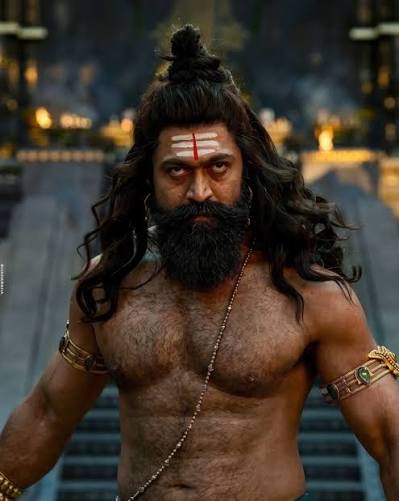
There is one thing I particularly appreciate about the film: its character-driven storytelling. Rather than simply moving characters around to serve the plot, the narrative allows us to understand the people who shape it. We witness Ravana’s transformation from an ambitious scholar into an indomitable ruler. We see Ram’s calmness and restraint emerge as a counterpoint to Ravana’s aggression. We understand the motivations, vulnerabilities and choices that eventually bring these two worlds into conflict.
As for Ranbir Kapoor, my reservations remain. I am not particularly fond of his clean-shaven appearance or certain expressions. But watching the film as a whole rather than fixating on individual performances made all the difference.
But perhaps what stayed with me most was the recurring idea of choices.
Ravana chooses to pursue the boon. He chooses to reclaim Lanka. He chooses power, and eventually, he chooses revenge despite the warnings of those around him. His downfall is not necessarily a consequence of his lack of intelligence; it is a consequence of what he chooses to do with that intelligence.
Ram, on the other hand, repeatedly chooses duty over personal comfort. His decisions, too, come with consequences, some of which we are yet to witness in their entirety.
And therein lies the greatest irony: Ravana, despite repeated warnings, cannot recognise the choices that will lead to his destruction. Ram, despite knowing what duty demands of him, cannot always escape the personal cost of his choices.
I walked in wanting to give my daughter a memorable movie outing. I walked out having rediscovered an epic I thought I already knew.
My verdict? An immersive, emotionally rewarding cinematic experience, with Yash delivering a performance that will stay with me long after the credits roll. Now, bring on the sequel. I have a Hanuman to meet!

You May Also Like

Pataal Lok: A Peep Into the Scarred Fabric of Our Society- A Review

An Insight Into the Near Future? The Mitchells vs. the Machines #Review