#Review: I Watched The Last Sunrise So You Don’t Have To.
Instagram had been personally campaigning for The Last Sunrise to me for days. Every second reel, recommendation and “you NEED to watch this” seemed to suggest that this was exactly the kind of story I would fall for. So, naturally, I watched it expecting something substantially better.
The film revolves around Ry, a young woman living with tuberous sclerosis, and Julian, who enters her life and eventually becomes her romantic partner. Her condition is supposed to shape much of the story, particularly her sensitivity to intense light and the restrictions it places on her everyday life. What follows is meant to be a deeply emotional love story about two people finding each other despite circumstances working against them.
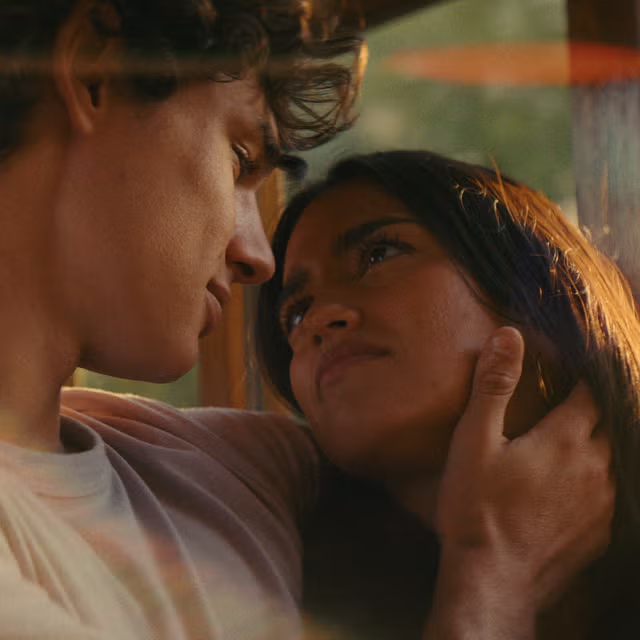
Except… I spent most of the film wondering why Instagram had been so aggressively invested in getting me to watch it.
The plot is incredibly predictable. There are very few moments where I felt genuinely surprised, and even fewer where I felt emotionally invested. And then there is the title. I genuinely do not understand the title The Last Sunrise. By the time the film ended, I was still waiting for the title to acquire some deeper emotional or narrative significance. Maybe I missed something, but the title felt almost as disconnected from the actual emotional experience of the film as I felt from the romance itself.

One thing that really bothered me was how inconsistently Ry’s condition seemed to exist within the story. If intense light is such a significant problem for her, how exactly does she manage certain situations without the film giving us enough sense of what that experience actually entails? The sunrise sequence with Julian on the boat, in particular, made me question how the rules of her condition suddenly became rather… flexible. If she is sensitive to intense light, how is this particular experience supposed to work?
The film tells us about her condition, but it doesn’t consistently make us feel its impact. Her illness often seems to function as a narrative device whenever the screenplay needs emotional stakes rather than as something that genuinely shapes her everyday existence.
And then there is the Midnight Sun comparison, which is impossible to avoid. The similarities are obvious: young woman with a serious light-related condition, restricted life, young man enters her world, romance develops around her illness, and light becomes this enormous metaphorical and literal obstacle.

But Midnight Sun had something this film desperately needed: emotional payoff.
It allowed the relationship to develop. There was anticipation. There was vulnerability. There was yearning. You actually understood why these two people were falling in love.
Here, I felt like the film looked at the entire slow-burn process and said, “That’s going to take too long. Let’s just make them kiss.”
And even the first encounter between Ry and Julian made me pause because the nude-meeting setup immediately reminded me of Off-Campus. The whole “first meeting while one of them is naked” scenario feels so strikingly familiar that I couldn’t help wondering whether originality had simply been left outside the room.
And this is particularly frustrating because Off-Campus actually uses those awkward, funny, sexually charged first encounters as part of a larger process of building attraction and personality. Here, it felt more like the film was borrowing the moment without recreating the chemistry and character development that made that kind of scene work in the first place.
Because, honestly, there is absolutely no chemistry between Ry and Julian.
None.
Zero.
Not even the cinematic kind where the screenplay desperately tells you, “Look! They’re in love now!” and expects you to go along with it.
I kept waiting for that moment where I would understand why these two people were drawn to each other. What do they see in one another? What makes this relationship special? What makes Julian different from every other romantic lead we’ve already seen?
I never got a convincing answer.
And romance cannot survive purely on proximity. Two attractive people standing next to each other does not automatically constitute chemistry.
This is also where I think contemporary romance creators really need to move beyond the idea that sex is the ultimate expression of love and intimacy. There seems to be an increasing tendency to make relationships sexually explicit very quickly and then assume that the audience will automatically interpret that intensity as emotional depth.
But physical intimacy is not a substitute for emotional intimacy.
Where is the slow build?
Where is the awkwardness?
Where is the anticipation?
Where is the yearning?
Where is the I want to tell you something but I’m terrified to?
Where is the moment when someone quietly becomes important to you before you even realise they’ve become important?
The best romances make you wait. They make you invest. They make you desperately want the characters to finally get together. The Last Sunrise seems to bypass much of that and go directly for explicitness, as though intensity automatically equals depth.
It doesn’t.
And Julian… seriously?
I know we’re supposed to appreciate him because he stays with Ry during her surgery. And yes, that is absolutely a good thing. But that alone doesn’t magically turn him into a green-flag romantic hero.
He wasn’t particularly compelling, emotionally fascinating or even especially likeable to me. I kept waiting for those moments that would make me understand Ry’s attraction to him, and instead I was asking myself: But… why Julian?
And if I’m asking that question this late into a romance, we have a problem.
Ironically, the relationship that worked best for me wasn’t the romantic one at all. It was Ry and her mother.
I genuinely appreciated the way they communicated with each other—with honesty, openness and a level of comfort that felt refreshingly real. Usually, films involving illness and family relationships rely heavily on the “I can’t tell you because I don’t want to hurt you” trope. Everyone hides something. Everyone misunderstands everyone. Everyone discovers the truth at the most dramatically convenient moment.
Here, the mother and daughter actually talked.
And I loved that.
It showed what a genuinely comfortable parent-child relationship can look like—one where difficult things can be discussed without turning every conversation into a melodramatic revelation. That relationship had more emotional authenticity for me than the central romance.
I genuinely wanted to like The Last Sunrise. Perhaps that’s partly because Instagram had already written half the review for me by repeatedly insisting that this was my kind of movie. And perhaps that built expectations the film simply couldn’t meet.
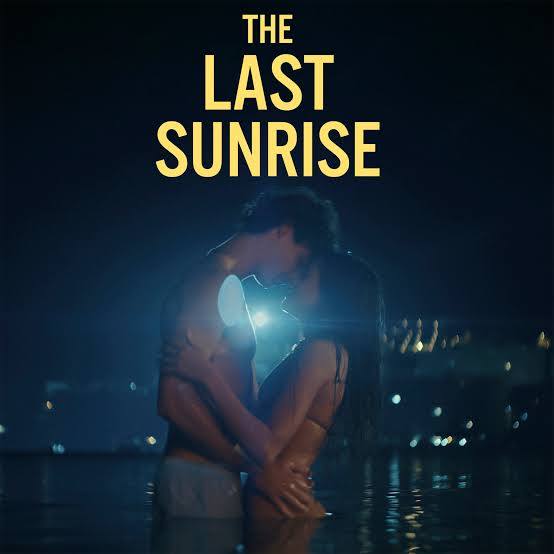
The premise had potential. The medical condition could have been explored with much more consistency. The romance could have been beautiful. The characters could have had layers. But instead, the film gives us a very familiar romantic template, a predictable trajectory, a first-meeting scenario that felt borrowed, and a relationship that never develops enough emotional depth to make its supposedly devastating moments truly devastating.
And yes, I know people are comparing it to Off-Campus.
Please. Let’s not get carried away.
The nude first-meeting scene already had me raising an eyebrow, and the rest of the romance certainly didn’t give me enough reason to forget the comparison.
The Last Sunrise is nowhere close to the emotional investment, character development or romantic payoff that makes Off-Campus work.
For me, this is one of those films where I walked away thinking: was it bad? Not necessarily. Was it as extraordinary as Instagram promised me it would be? Absolutely not.
Also, perhaps someone can explain the title to me.
Because after watching the entire movie, I am still waiting for the sunrise to make sense.


One Comment
www.555329.com
An Engaging Blog Post